
Grieving during the Holidays


The holiday season, whether you are celebrating Hanukkah, Kwanzaa, Christmas, or another cultural or family tradition, can feel complicated after the death of a loved one. Lights, music, and gatherings often arrive alongside deep longing, sadness, or a sense that something is missing.
If you are grieving, especially with children, it is important to know this. There is no right way to feel during the holidays. Joy and grief can exist together. Or grief may take up all the space, and that is okay too.
It is okay if you do not feel festive
You do not owe anyone holiday cheer. Some days you may want to participate in traditions. Other days you may want quiet, rest, or something entirely different. Children often take cues from the adults around them, so naming feelings openly, such as saying this season feels hard for me, helps normalize their own emotions and reduces pressure to perform happiness.
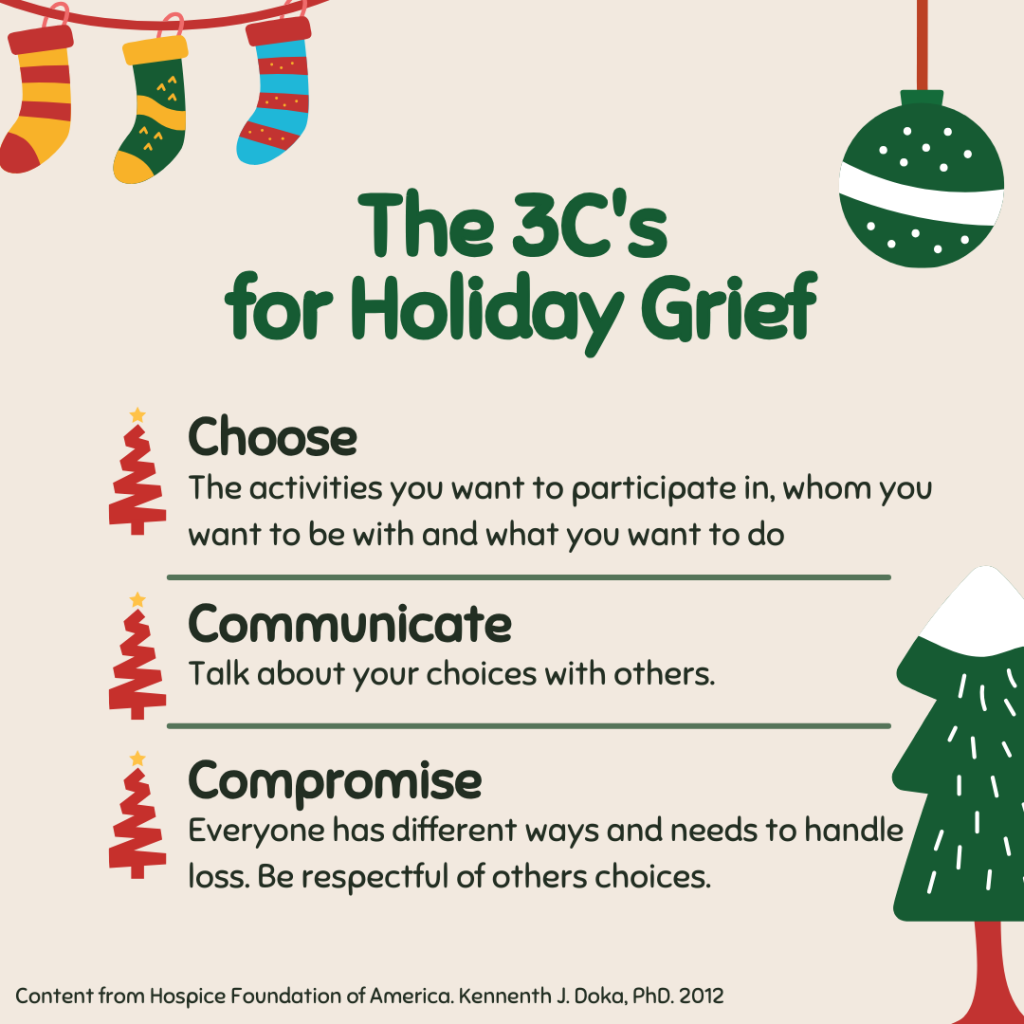
Include children in decision making
Grief can make children feel powerless. Including them in decisions about the holidays helps restore a sense of control and safety.
You might ask questions like:
– What feels important to keep this year?
– Is there anything you want to change?
– Would you like to do something special to remember them?
Some children may want to talk about their loved one often. Others may prefer quieter remembrance. Let their answers guide you and remember that preferences can change from year to year.
Gentle activities to remember your loved one
These activities can be adapted for different ages, cultures, and traditions. Choose what feels right for your family or create something new together.
1. Light a candle of remembrance
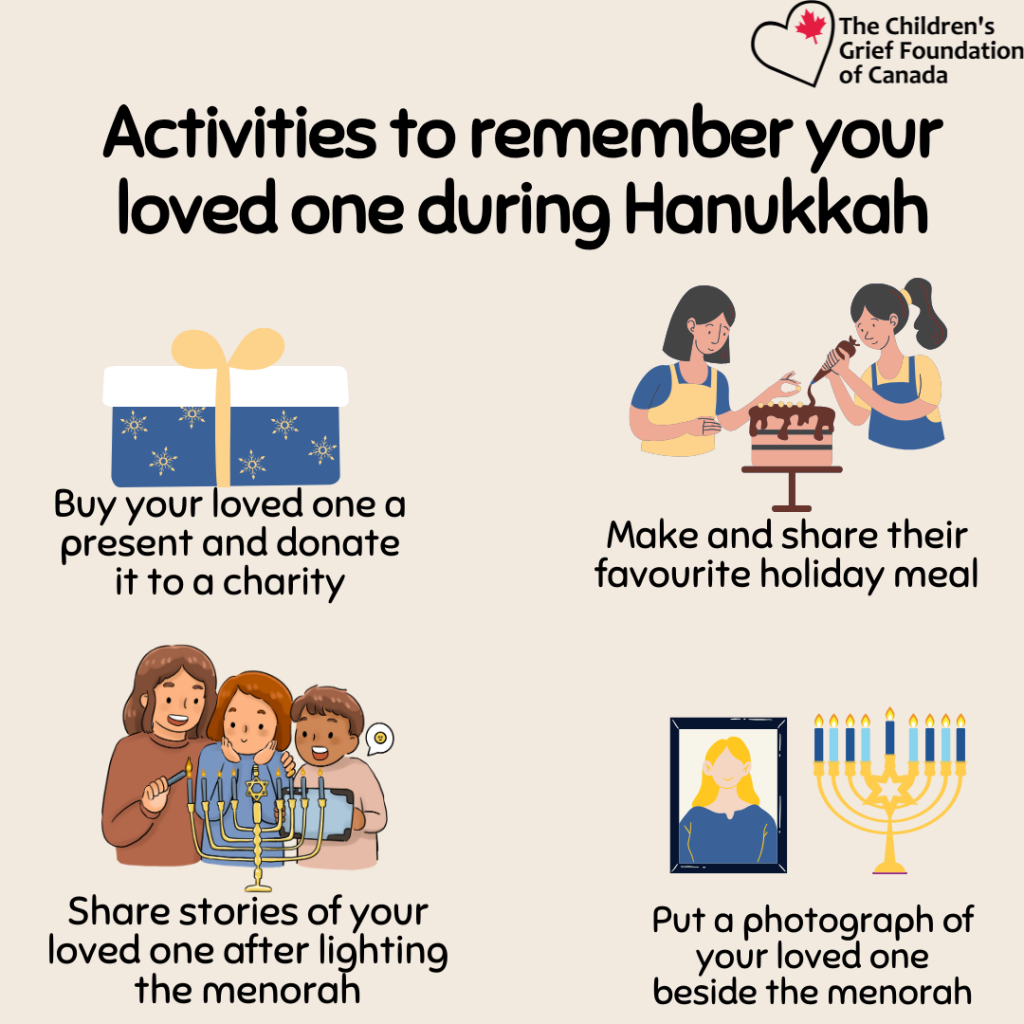
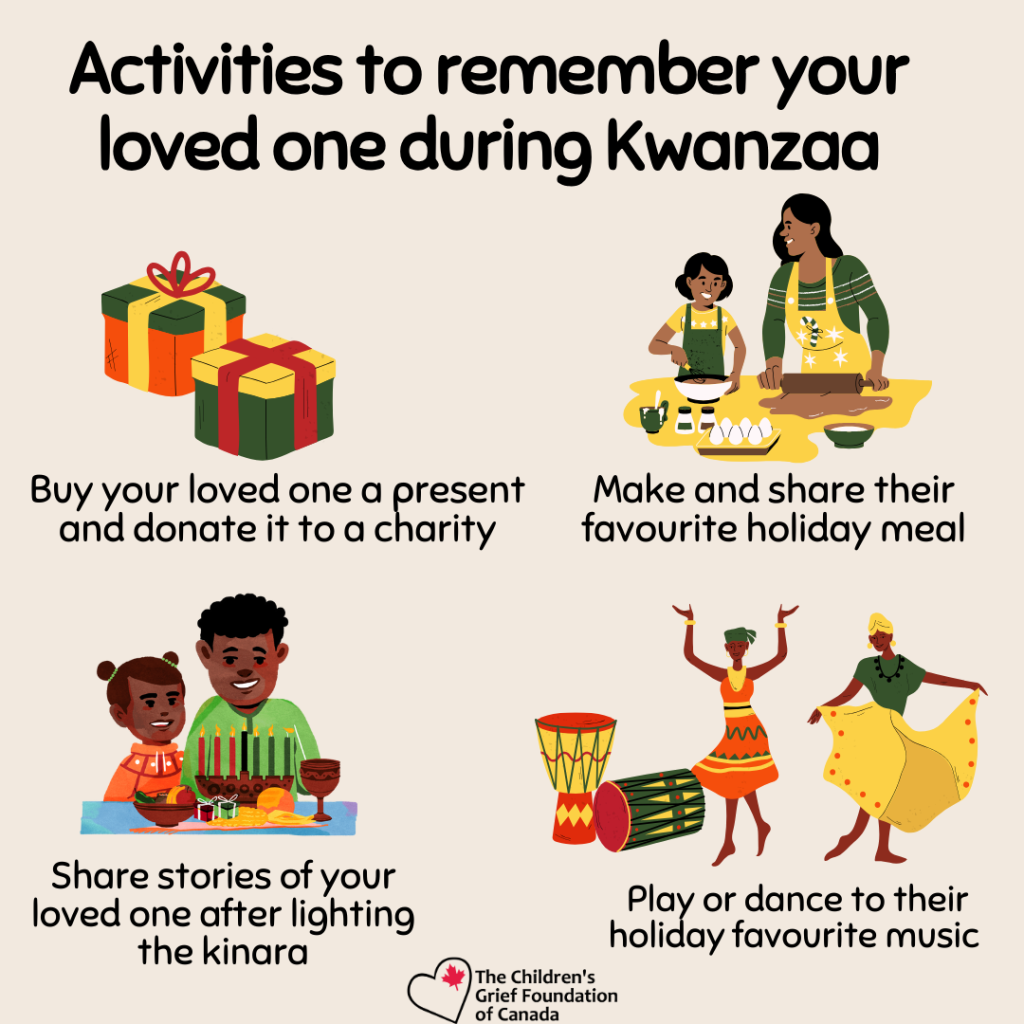
Lighting a candle during Hanukkah, Kwanzaa, Christmas, or another meaningful moment can create a quiet space for reflection. You can say your loved one’s name, share a memory, or simply sit together in silence.
For children, you might invite them to decorate a candle holder or choose when the candle is lit.
2. Create a memory ornament or symbol
Invite children to make an ornament, decoration, or symbol that represents their loved one. This could include writing their name or a message, adding photos or drawings, or using colours that remind them of that person.
You can hang it on a tree, place it on a shelf, or bring it out each year as part of a remembrance ritual.
3. Share stories and memories
Set aside time to tell stories. These can be funny, everyday, or deeply meaningful moments. You can do this during a meal, while cooking or baking together, or at bedtime.
Children often fear forgetting. Hearing stories helps keep memories alive and reassures them that their loved one still matters.
4. Write letters or messages
Writing can help children express feelings they do not yet have words for. Invite them to write a letter to their loved one, draw a picture, or share one thing they miss or one thing they remember.
You can keep these in a memory box or choose a symbolic way to honour them, such as placing them near a candle or special object.
5. Give in their honour
Acts of kindness can be a meaningful way to honour someone’s legacy. Together, you might donate to a cause your loved one cared about, volunteer as a family if it feels manageable, or perform small acts of kindness and name them in their memory.
This can help children feel connected and purposeful during a season that can otherwise feel heavy.
6. Make space for rest and flexibility
Some years, the most compassionate choice is to simplify. Skipping events, shortening traditions, or creating new routines is not failure. It is care.
Let children know plans can change. Let yourself change your mind too.
Moving through the season together
Grief does not pause for the holidays. It shows up in quiet moments, in laughter that turns to tears, and in traditions that feel different than they used to.
By giving yourself permission to feel what you feel and by inviting children into honest, age-appropriate conversations, you create space for connection, remembrance, and coping.
Above all, remember that doing less is still doing enough, and remembering your loved one in your own way is always valid. 💙


Mother’s Day Activities for Grieving Kids
Mother's Day is a time for celebrating moms, but for many children, it can be a painful reminder of a mother figure they've lost – a mom, aunt, grandma, or close family friend. Even in grief, there are ways to remember and celebrate the special bond you shared with your mom. Here are a few ideas.
The Loss of a Furry Friend: Helping Children Grieve a Pet
Pets are more than just companions; they become cherished members of the family. Here are some tips to help children navigate the loss of a furry friend:
Having “The Talk”: Tips for Explaining Death to a Child
Losing a loved one is a difficult experience for anyone, but for children, it can be especially confusing and scary. They may not have the words to express their feelings or understand the concept of death. Here are some tips to help you have an open and honest conversation about death with a child.